Segmentation Under SEQRA
INTRODUCTION
The New York State Environmental Quality Review Act (“SEQRA”) strongly discourages and tightly regulates the segmentation of a project into smaller components or phases. The regulations at 6 NYCRR 617.3(g) clearly require a comprehensive environmental review of the entire “action” – all activities and steps of the project – and its potential adverse impacts.
The Rav Tov dining hall application before the Planning Board presents two classic forms of segmentation which require extra scrutiny under SEQRA:
First, the proposed dining hall is just the latest step in a series of incremental changes that have gradually transformed the property into a large-scale camp and hospitality complex, accommodating a population greatly expanded from its prior non-conforming use as the Pine Grove Dude Ranch. Evaluating the proposed dining hall in isolation would ignore the cumulative intensification of use that has occurred through successive modifications to the property and expansion of its non-conforming use.
Second, the applicant describes the proposed facility narrowly as a dining hall required to serve the girls’ summer camp, while disregarding the property’s concurrent operation as a hotel, resort, and event venue. It is reasonably foreseeable that, like other features of their property, the new “ballroom” (as the applicants themselves repeatedly referred to it when before the planning board on 12/8/25)1 will be used during the non-camp season. By artificially limiting the project description to a single component of the property’s operations and the proposed building’s use, the application is in danger of constraining the scope of environmental review in a manner inconsistent with SEQRA.
SEGMENTATION ACROSS TIME: INCREMENTAL TRANSFORMATION OF THE PROPERTY
The current application cannot be understood without examining the historical evolution of the property’s use from its pre-existing non-conforming use, the Pine Grove Dude Ranch.
1 (see video of the meeting at timestamp 02:55:22 for example)
The historic Pine Grove Dude Ranch operated with substantially lower intensity:
· Approximately 104 rooms; Typical room occupancy of roughly 3–4 persons.
· Maximum occupancy of approximately 400 persons.
· Short-duration stays.
· Seasonal dormancy.
· Agricultural components including livestock operations.
Following acquisition by the applicant, the property has undergone a series of changes that have gradually transformed it into a larger operation, both summer camp and hospitality complex. This evolution includes:
· A Temporary Residence (hotel) Permit from DOH, authorized with 126 rooms (a greater than 20% increase from the Dude Ranch).
· A children’s camp with DOH permitting for 570 campers and more than 200 staff (as much as a potential 92% population increase from the Dude Ranch, with a per room density of more than 6 persons per room).
· No agricultural or livestock operations.
· Day visitors and ancillary uses.
· Connection and/or combined operations with its sister Camp Rav Tov at 350 Cherrytown Road, causing a dramatic and significant increase in traffic between the two camps up and down Cherrytown Road.
· A new bathhouse (which, while referenced by their DOH permit, has not appeared in FOIL requests from the Town of Rochester for recent building permits).
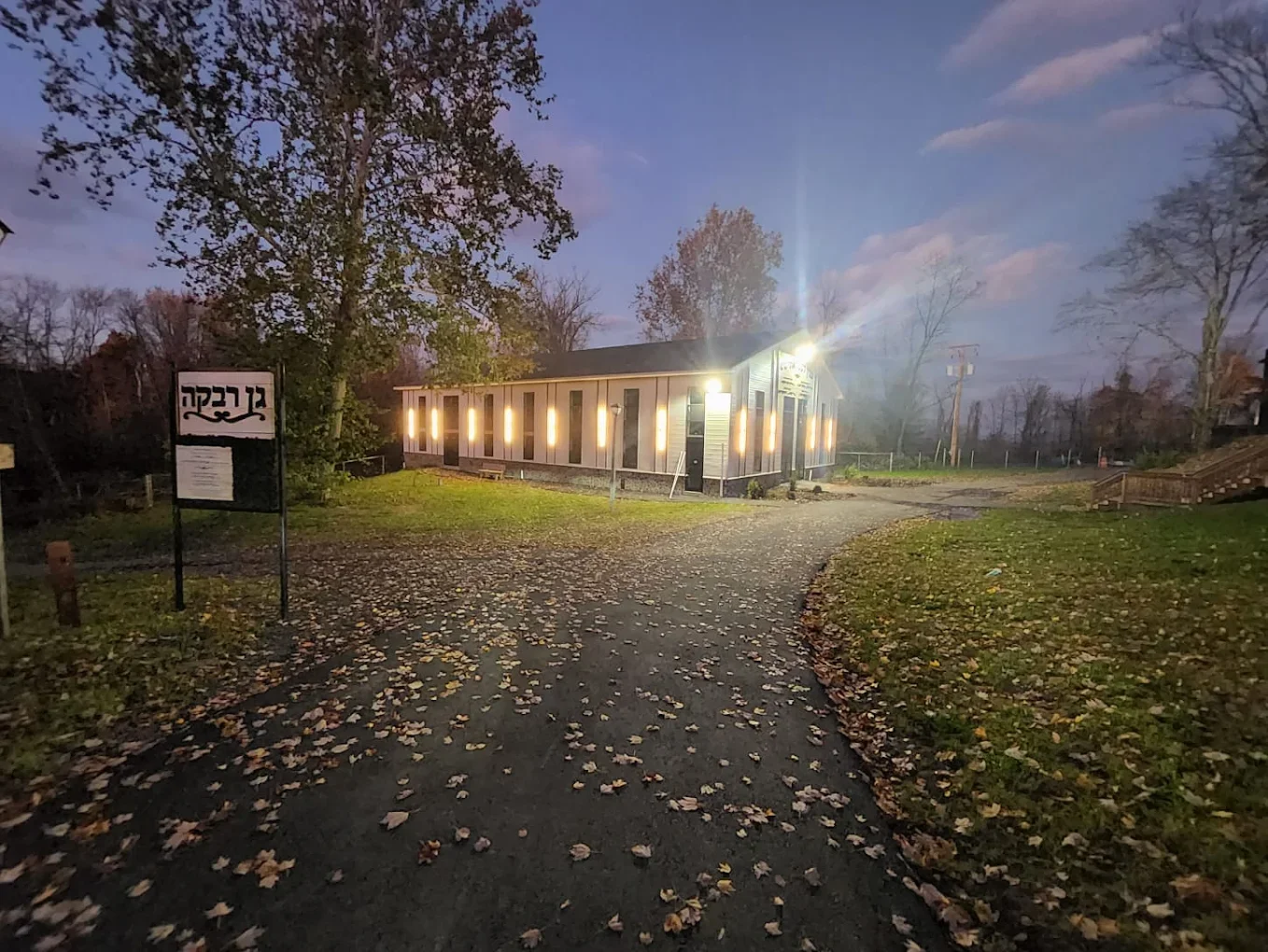
Image via Google
Taken together, these changes represent a substantial intensification of use relative to the historic Pine Grove operation; the current use, even before consideration of the proposed dining hall/ballroom, materially exceeds the historical nonconforming use. The proposed dining hall therefore cannot reasonably be viewed as a stand-alone improvement. Rather, it represents a central infrastructure component supporting the property’s expanded scale and density of occupancy. SEQRA requires agencies to consider such cumulative changes and related actions when determining environmental significance.
SEGMENTATION WITHIN THE APPLICATION: ARTIFICIALLY NARROW DESCRIPTION OF THE PROJECT
A second segmentation concern arises from the way the project itself is described by the applicant, who solely characterizes the proposed structure as a dining hall to serve the girls’ summer camp, asserting that the building is needed to allow campers to be fed in a single sitting.
However, the property is not operated exclusively as a seasonal camp. The applicant also maintains a Ulster County Department of Health temporary residence permit to operate the site as a hotel and resort facility.
Photographs of the facility found on the internet confirm that the site is also used for formal functions and large group gatherings:

Image via Google
The property also displays prominent Hebrew signage identifying the principal building as a “Beit HaMidrash,” or Torah study hall:
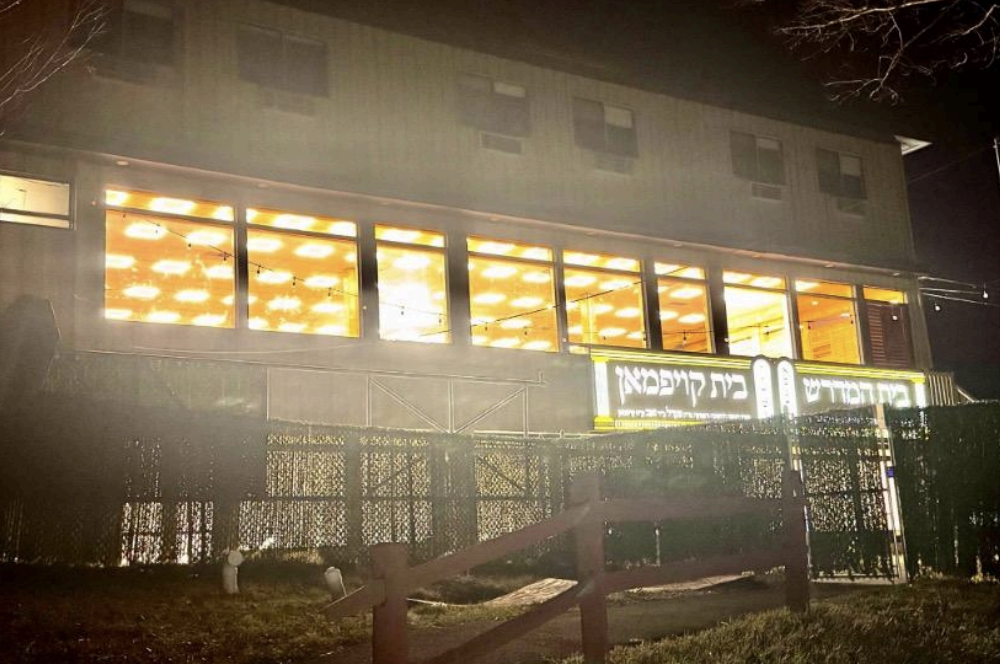
Referenced signage. Image via Google.
This visible designation of space for organized religious study and assembly further reflects that the complex supports functions beyond the seasonal girls’ camp described in the application, reinforcing the need for any environmental review to consider the broader range of reasonably foreseeable uses enabled by new, large-scale assembly facilities on the site.
When a facility is designed and permitted in a manner that enables multiple operational uses, SEQRA requires environmental review to consider the full range of reasonably foreseeable uses, not merely the narrowest characterization of “dining hall” offered by an applicant. The board must consider the new structure’s role as a ballroom for the property’s broader year-round hospitality and event operations; failure to do so could constitute a second form of segmentation.
SEQRA REQUIRES CONSIDERATION OF THE ENTIRE ACTION
Since SEQRA requires agencies to evaluate the entire action, including cumulative changes and reasonably foreseeable uses, and not just isolated components of a project, the Planning Board must evaluate the proposed dining hall in the context of:
1. The cumulative intensification of use that has occurred at the property through successive modifications and expansions; and
2. The full range of reasonably foreseeable uses of the proposed facility within the property’s broader hotel, resort, and event activities.
The applicant argues that the project does not expand use because the site’s DOH permit allows overnight occupancy of approximately 770 persons and that will not increase.2
That argument misunderstands SEQRA’s prohibition on segmentation. Environmental review must examine changes in infrastructure, operational intensity, and assembly capacity, not merely numerical increases in overnight occupancy.
THE DINING HALL FACILITATES PEAK ASSEMBLY CAPACITY
The proposed dining hall represents a large, centralized assembly facility designed to accommodate the property’s substantial population in a single sitting and to support large gatherings. A centralized assembly facility materially alters the operational capacity of the site even if nominal occupancy remains unchanged.
Concentrated assembly capacity:
· Increases peak traffic surges.
· Intensifies commercial deliveries and commercial waste generation and collection.
· Intensifies lighting usage.
· Greatly Increases parking demand.
· Increases water usage and wastewater generation (consideration should be also given here to the aforementioned “bath house”).
· Magnifies cumulative impacts, many of which (i.e. lighting) are already in code violation.
Even if nominal occupancy remains constant, the physical infrastructure facilitating concentrated assembly constitutes intensification.
Under § 140-42, expansion or extension of a nonconforming use that increases traffic, parking demand, stormwater runoff, or infrastructure burden must be considered where impacts cannot be fully mitigated.
2 Questions remain whether proper permitting for other factors such as fire, building codes, parking, etc support an occupancy of 770.
INFRASTRUCTURE CONSTRAINTS REMAIN UNRESOLVED
At occupancy levels approaching 770 persons, existing infrastructure constraints become critical:
· Required parking standards of § 140-17 requires tens of thousands of square feet of impervious surface, allowing little room for snow storage, parking landscaping guidelines, handicap parking, electrical vehicle charging, and other parking requirements.
· Traffic generation materially exceeds historical conditions, creates sightline issues, and has enormous potential to cause town and county road degradation and increased traffic accidents due to the intensity of use.
· Water withdrawal and septic loading are significantly higher than Pine Grove-era impacts.
Accordingly:
· Section 140-42(E) prohibits expansion that reduces compliance with parking or degrades roadway service levels.
· Section 140-42(D) prohibits increases in stormwater runoff. Where existing operational intensity already strains site capacity, construction of additional assembly infrastructure significantly compounds these issues.
CONCLUSION
The applicant’s claim that “there is no expansion because occupancy remains at 770” misdirects the relevant inquiry.
SEQRA requires the Planning Board to evaluate the entire action, including:
• the historical baseline of the Pine Grove operation;
• the cumulative intensification of use since acquisition;
• the property’s dual authorization as both camp and hospitality facility; and
• the assembly capacity created by the proposed dining hall/ballroom.
When viewed in this broader context, the proposed structure is not a neutral modification. It is a central infrastructure component supporting the continuing expansion of a nonconforming use. Where that cumulative expansion exceeds the capacity of the land, infrastructure, and surrounding community, both SEQRA and Article VI require denial, or at minimum, further environmental study.
CITATIONS AND PRECEDENT:
Segmentation under SEQRA is defined as “the division of the environmental review of an action such that various activities or stages are addressed... as though they were independent, unrelated activities” (6 NYCRR 617.2[ah]). Courts have repeatedly held that segmentation occurs where a project is broken into smaller components in order to avoid full environmental review, thereby allowing actions with potentially significant environmental impacts to evade scrutiny (see Matter of Bowers Dev., LLC v Oneida County Indus. Dev. Agency, 224 AD3d 1240, 1243 [4th Dept 2024], quoting Matter of Court St. Dev. Project, LLC v Utica Urban Renewal Agency, 188 AD3d 1601, 1603 [4th Dept 2020]).
The regulations further provide that “[c]onsidering only a part or segment of an action is contrary to the intent of SEQR,” and permit segmented review only where the lead agency expressly states its reasoning and demonstrates that such review is no less protective of the environment (6 NYCRR 617.3[g][1]; see Matter of J. Owens Bldg. Co., Inc. v Town of Clarkstown, 128 AD3d 1067, 1068 [2d Dept 2015]).
In Evans v. City of Saratoga Springs, 202 A.D.3d 1318 (3d Dep’t 2022), the city approved a rezoning that allowed development of parcels of land owned by Saratoga Hospital, and issued a negative declaration. No specific development proposals for one of the parcels had been presented to the city. However, the court found that rezoning of that parcel was the first step in eventually developing it, and the potential development of the parcel “was not so attenuated from the zoning map amendment that reviewing an expansion of the hospital constituted permissible segmentation,” and the city was “obligated to consider the impacts to be expected from such future development at the time of rezoning, even absent a specific site plan for the project proposal.”
In Fresh Air for the Eastside v. Town of Perinton, Index No. E2021008617 (Sup. Ct. Monroe Co. Dec. 21, 2022), concerned the existing High Acres Landfill & Recycling Center in Perinton, New York. The town had entered into a new “host community agreement” for the landfill. The court found that the SEQRA review of the agreement must consider all the other approvals necessary for the landfill to continue to operate, including its air pollution permit, and that the other agencies whose approvals are needed must be treated as “involved” agencies under SEQRA; to do otherwise would be impermissible segmentation.
In Matter of Andes v. Zoning Board of Appeals of the Town of Riverhead, 2023 NY Slip Op 03009 (2d Dept 2023), the ZBA approved the expansion of a preexisting nonconforming marina and shellfishing operation. The Second Department annulled that determination, holding that while nonconforming uses may continue, they may not be expanded as of right, and that new construction or reconstruction may constitute an impermissible enlargement rather than a continuation of the existing use. The court found that unresolved questions regarding post-2003 reconstruction—including the absence of site plan approval and the Building Department’s unsupported conclusion that the work did not expand the nonconforming use—required further review, and remitted the matter to the ZBA.